02: I thought What I Suffered From Was All My Fault!

photo credit: Dan Raz | Pexels
To me, not being thin like other people around was THE biggest problem in the whole wide world!
For decades—since my early teens, a single question haunted my days and nights—how can I make the fat on my body disappear so I can be smaller? Basically, how can I be thin? Or at least thinner than I am now? The search for solutions became a ritual, an endless pilgrimage from one promised method to the next. New diets were talismans I hoped would finally work; I drank protein shakes like small, bitter oaths. I cycled through dietitians and clinic scales that measured me not in kindness but in failure, each “goal” missed like a quiet reprimand. And even when I felt like I was starving myself to death, each breath seemed to manage to lay another fat layer on me; simply inhaling felt like adding pounds—an accusation from my own body.
Exercises were studiously studied as though they were new languages, taking up sports and workout routines with the fervor of someone chasing a ghost. Many times my body betrayed me—fainting without warning, finding myself on the floor with no memory of the fall: alone in the shower, alone in my bedroom, or suddenly on the ground amid other people. By luck or grace I never hit my head on something and cracked my skull; somehow I learned to survive all the slips, while the ache that drove me kept asking for more.
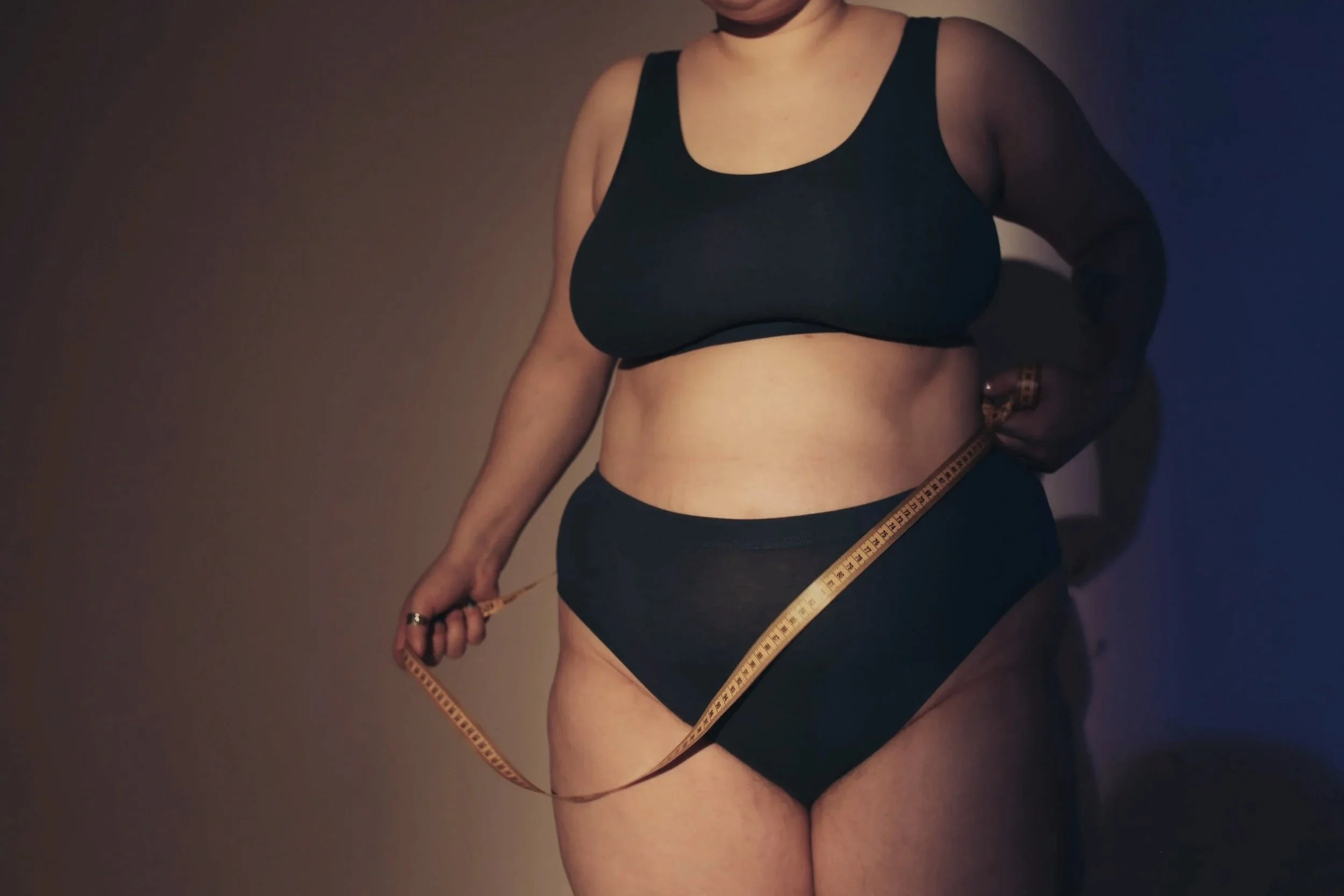
photo credit: Polina Tankilevitch | Pexels
Between those countless desperate “rites and rituals” performed to shed parts of me—my weight, my flesh and my fat, I gluttonously fed the hunger that was meant to starve me. And I binged until my bones felt blurred and my insides like factory machines, grinding and packaging me into someone unrecognizable, a gorging vampire!
In my mind I could only settle on one bitter belief: Something is terribly wrong with me—clearly I cannot eat “normally” and get down to a “normal” size like other people. Even those who eat more, seem to struggle less and remain slight; I alone am engulfed. Something is fundamentally, irreparably wrong with me!
When I look back at how vast my hunger for control and how all-consuming my thoughts about my body once were, I see now that, for decades I never suspected any outside force fanning those flames—no idea that my obsession might have been driven by something beyond me.
Fortunately, I later learned about those drives!

photo credit: Alex | Pexels
Two of the biggest ones, and the ones I most want to address first, are what IFS calls: “cultural burden” and “societal burden” — the relentless beauty standards that bombard me {and you!} day in and day out.
In the book “Unburdened Eating”—Healing Your Relationships with Food and Your Body Using an Internal Family Systems (IFS) Approach, Jeanne Catanzaro — the Vice President of the IFS Institute and the author of the book wrote: “You live in a culture that tells you your body isn’t good enough and that you can and should change it. From the time you are born, you are inundated with messages about your body, how it should look and function, and how you should eat and move to achieve these standards. These beliefs deepen the schism between your mind and body, and you start trying to make it align with what society values: youth, thinness, Whiteness, fitness, health, and able-bodiedness. The pressure to conform is higher if you live in a larger body or if you have the added burdens of bias related to race, gender, class, sexuality, age, or ability. You look for diets or “lifestyle” plans that promise to help you fit in and enter into a painful cycle of being “on” or “off track”, depending on what you’ve eaten, whether you worked out, or what you weighed this morning.”
What Jeanne wrote fits me to a T—an ache of recognition that opened a window. However, I also wondered, with baffled fury, why the h_ck had I never recognized those standards for so long—let alone how they affected me?!? I had assumed my compulsions came from nowhere but myself, a defect lodged in the bones: that I could not change how I ate or the size I took up in the world.
Then a quieter wisdom arrived: “It’s not that you’d never recognized those “standards”. It only seemed that way because those messages were utterly internalized. They lived beneath your skin and behind your thoughts, a chorus you learned to speak as your own “normalized” rule. As Jeanne names it plainly — the standards deepened the schism between mind and body — and in that split, the obsession took root.”
Ouch — a knife of truth, sharp and cold, sliced down my throat. It burned on the way in, fierce and honest, and pain unravelled old, knotted places.
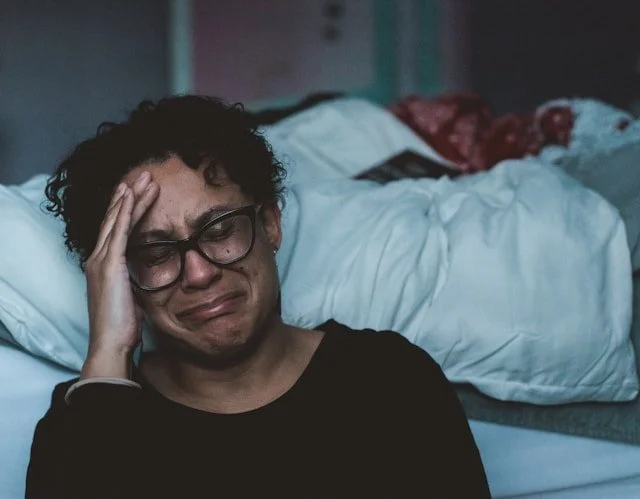
photo credit: Claudia Wolff | Unsplash
I remember, that was my first response. Many many times I let myself cry, surrendering to the tears that wanted out—not knowing why. And little by little, I allowed myself to sit with the pain that the truth I’d recognized had unlocked. I stayed present with my whole self, holding the parts that felt sad and wounded—and witness their sadness and wounds. I tended to them like a loving mother would tend her vulnerable child—gentle, patient, and protective. However, many many other times too, there were needs to “toughen up”, and who knows how many times I put food in my mouth to “shut up” the pain.
Then, between one bout of sadness and the next, I got angry.
So, my enormous obsessions around food and my body size & weight are just the tip of the iceberg then!
And what’s under the water are these colossal cultural burdens and societal burdens?!?!
They bruised me like quiet weather—cultural weights and societal levers that press inward. Billboards and glossy ads sing the gospel of an ideal silhouette, diet programs whisper the promise of thinness, and everywhere the siren call of engineered food—sweet, salty, crunchy, addictive—keeps hands reaching, mouths moving, bodies shifting. Industry and image conspire: some sell us the discipline of deprivation, others the craving that feeds it, trading our hunger for their profit while our worth is measured in inches and pounds!
Now I’m f_cking angry! How could you do this?!? That is a heinous crime!!!
In a safe space I create in my home, I yelled and yelled and yelled. And I whacked my couch so many times and in so many “sessions” with the kiddy baseball bat I have in my closet ready for whenever there’s an urge to hit someone. So that I don’t go out there to hit them.
Then, between one bout of anger and the next, I also remember putting food in my mouth many times too, to “shut up” the anger.

photo credit: Rafael Rendon | Pexels
Then, kindness and compassion followed, slow as soothing broth, settling warm into the hollows where pain and anger had lived. Ahhh — relief blossomed: the world did not tilt; my mind did not betray me. I am not crazy. I am waking, stitched back together by the gentle fire of knowing. There are burdens that I’ve been carrying within me—and perhaps, even literally.
Ahhh… That is so validating! And it is absolutely a big deal!
photo credit: Ruben Mavarez | Unsplash
That’s how important it is to address these “drives” as burdens.
Why?
The Britannica Dictionary gives two meanings to the word “burden” perfectly as a description of what IFS means and what I myself have experienced: 1) something heavy that is carried, 2) someone or something that is very difficult to accept, do, or deal with.
Therefore, to me, the fact that these “drives” are addressed as “burdens” is significantly helpful because it describes what it is perfectly!
Now, as IFS identifies and normalizes having multiple parts or sub-personalities—like family members—within each and every one of us—along with our own core Essence which is called Self—with a capital S—or Soul—the name I prefer, it’s my inner parts that hold feelings. And the one noticing those feelings, recognizing those parts and validating them is my Self/Soul—who has unlimited compassion to give.
As I mentioned, at times, feelings were too much for me too bear. So in order to protect me, a part of me used food to push down feelings or to “exile” the part that was feeling very sad or very angry. And when this happens IFS calls it “blending”—meaning I was blended with my part(s) and couldn’t take action as my Self or Soul to take care of my parts. However, everything is all part of my healing, sometimes quickly, sometimes slowly. And in IFS communities, we say “Slow is Fast.”—therefore, it’s all good. And as I keep practicing these Self/Soul-and-parts connections, over time they lead to the process of “unburdening” which is to release the burdens that we or our parts carry. That’s why addressing burdens is critical; because without knowing and acknowledging burdens, the process of unburdening which leads to our healing will not have a chance to happen.
Alright! That’s a little bit of IFS and Self-Reparenting there, that I will go deeper into later. But for now, I wanted to acknowledge and address that if you’ve experienced the “torture” like I have, I hope you can witness and validate some of your parts within yourself, and the burden(s) they carry from these kinds of cultural and societal burdens that they’ve experienced.
Reflection Prompts:
Since I’m a devoted believer in healing magics and in miracles that arise through honest reflections, I’ve prepared some gentle reflection prompts for you in my next post. Please visit “Story 02.a: Reflection Prompts on Story 02” to find them, and begin your journey inward.
Remember, “Slow is Fast”. And while you’re doing that, please know that I am there with you!
With love,
Gaia